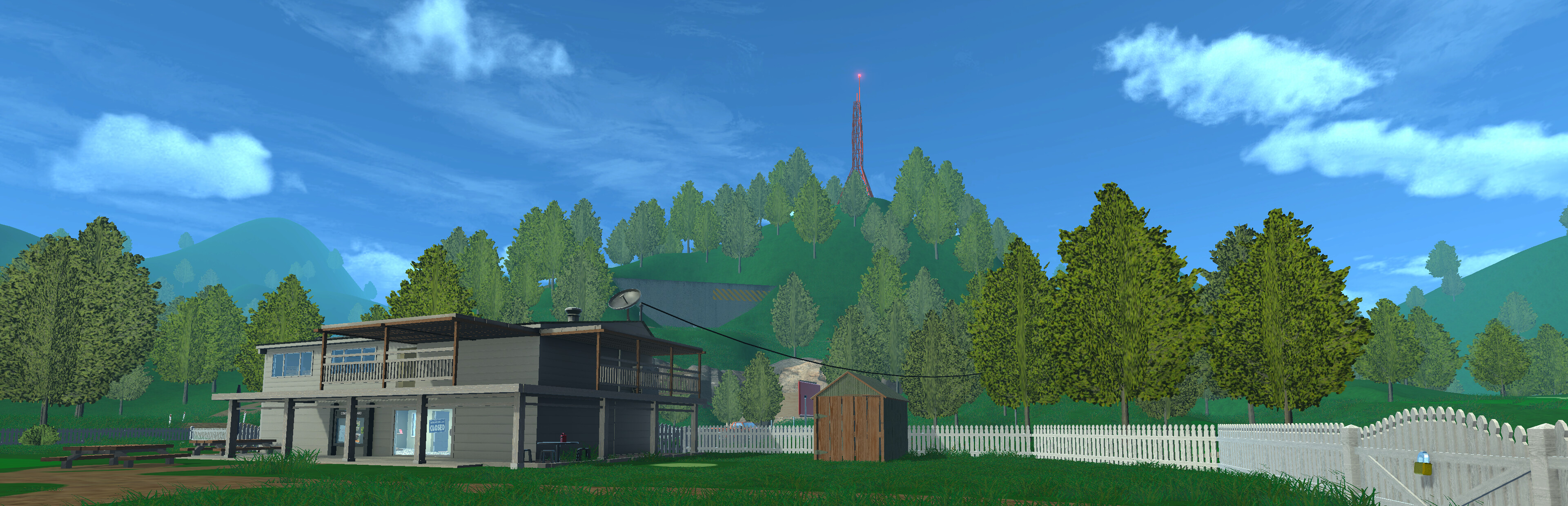
Mastering the Normal Golf Game Impossible Chip In Shot
Learn how to master the normal golf game impossible chip in shot with our guide on Luke Muscat's unique mechanics, swing physics, and community-tested tips.
Published:
Video Guide
Normal Golf Game Demo - Impossible Challenge Chip In ShotTable of Contents
Landing a normal golf game impossible chip in shot is perhaps the most rewarding experience in modern indie sports gaming. Unlike traditional simulators that rely on static power bars, Normal Golf Game, developed by the legendary Luke Muscat, demands a level of physical coordination that feels more like rubbing your head while patting your stomach. Because the game utilizes real-time mouse movement to simulate the physical arc of a swing, even a normal golf game impossible chip in shot feels like a genuine athletic achievement rather than just a lucky button press.
Understanding the mechanics behind this "not-so-normal" experience is the first step toward consistency. Created by the mind behind Fruit Ninja and Jetpack Joyride, this title leans into "novel input mechanics" to translate the frustration and triumph of real golf into a digital space. If you are struggling to find the bottom of the cup from the fringe, you aren't alone; the community has spent countless hours dissecting the wobbly physics and FMV (Full Motion Video) aesthetics to figure out exactly how to conquer the green.
The Physics of the "Normal" Swing
To master the normal golf game impossible chip in shot, you must first accept that the game does not want you to be precise. The core mechanic involves using your mouse to "draw" the swing path in real-time. Unlike PGA Tour or Mario Golf, there is no locking mechanism. If your hand tremors, your golfer’s hand tremors.
Real-Time Input vs. Traditional Meters
In a standard golf game, you select a club, time a click for power, and time another for accuracy. In Normal Golf Game, you are responsible for the entire physical delivery of the club head. You adjust the angle of the club using your keyboard, which is constantly fluctuating in a "wobbly" motion, while simultaneously drawing the swing line with your mouse. The longer the line you draw, the more power you generate, but the higher the risk of the swing path veering off-course.
Mechanic
Traditional Golf Games
Normal Golf Game
Power Control
Timing-based meter
Length of mouse-drawn line
Club Angle
Static/Preset
Real-time keyboard adjustment (Wobbly)
Accuracy
Snap-to-grid / Timing
Manual path drawing
Feedback
Visual UI bars
FMV character movement & Physics
Selecting the Right Tool for the Chip In
You cannot achieve a normal golf game impossible chip in shot if you are using the wrong club for the lie. The game offers a standard set: Driver, Hybrid, Iron, Wedge, and Putter. For the "impossible" chip-ins—those shots from just off the green or behind a hazard—the Wedge and the Iron are your primary tools.
The Wedge: Best for high-lofted shots where you need the ball to stop quickly. The "wobble" is more pronounced here because of the loft, making the timing of your mouse draw critical.
The Iron: Use this for "bump and run" shots. If you have a clear path to the hole across the fringe, the Iron provides a more predictable roll, though it requires a shorter, more controlled mouse movement.
The Secret of the Wedge
When using the Wedge, focus on the "connection point." According to community reports, players often over-swing. A shorter, cleaner line drawn with the mouse often results in a more accurate chip than a long, high-power stroke.
Step-by-Step: Executing the Impossible Chip In
Landing a normal golf game impossible chip in shot requires a specific sequence of actions that balance the game's chaotic input with intentional physics.
1. The Real-Time Alignment
Before you even touch your mouse, use the keyboard to set your club angle. Remember, the angle is not static; it fluctuates. You need to time your swing to coincide with the moment the club face is square to your target.
2. Drawing the Path
Start your mouse movement behind the ball. Imagine you are literally pulling the club back. The distance you move the mouse translates to backswing length. For a chip shot, you only need a fraction of the movement required for a drive.
3. The Follow-Through
This is where most players fail. You must "push" the mouse forward through the ball. If your mouse path curves to the left or right during this motion, the ball will slice or hook. The normal golf game impossible chip in shot is usually lost in the final 10% of the mouse movement.
4. Managing the "Wobble"
Developer Luke Muscat intentionally added a "wobble" to the club's idle state. This prevents players from perfectly lining up a shot and waiting for a "go" signal. You must be reactive.
Shot Phase
Action
Why It Matters
Setup
Keyboard Angle Adjustment
Determines the initial trajectory and loft.
Backswing
Mouse Pull-Back
Sets the potential energy/power of the shot.
Contact
Mouse Forward Stroke
The "draw" must be straight to avoid shanking.
Release
Timing the "Wobble"
Ensures the club face is square at the moment of impact.
The "Anti-Cheese" Update and Player Experience
Early in the game's development (originally titled Luke Muscat’s Ultimate Golf Challenge), players discovered they could "cheese" the system. By clicking in specific areas of the input circle, they could bypass the chaotic mouse drawing and achieve perfect contact every time.
Auto-Return Hands: The golfer’s hands now automatically return to a starting position when there is no input.
Randomized Starting Position: The "idle" position is slightly randomized over time, making it nearly impossible to memorize a single pixel-perfect click spot.
Randomized Return Speed: Based on "player experience" and feedback from users like Hugo on the Steam forums, the speed at which hands return to center is now randomized to prevent macro-users from dominating the leaderboards.
These changes mean that a normal golf game impossible chip in shot is now a true test of skill rather than a mechanical exploit. Players must now "hone a shot" by practicing the feel of the mouse movement rather than relying on static UI elements.
Advanced Strategies: Reading the FMV Cues
One of the most unique aspects of Normal Golf Game is its use of FMV (Full Motion Video) golfers. Luke Muscat chose this style partly to lean away from his self-proclaimed weakness in traditional art, but it serves a functional purpose for the player.
The green screen "bleed" and the jerky nature of the FMV frames actually provide visual cues for the swing. Watch the golfer’s shoulders. In many "impossible" shot scenarios, the character's physical lean will tell you more about the potential power than any UI element could.
Common Mistakes to Avoid
Over-Drawing the Line: For a chip shot, a long mouse line is your enemy. It introduces more room for directional error.
Ignoring the Meta-Narrative: Much like The Stanley Parable, the game may try to distract you. Stay focused on the ball.
Static Aiming: If you wait too long to swing while trying to get the perfect angle, the "wobble" will eventually punish you. It is better to swing with a "good enough" angle than to wait for a "perfect" one that never stays.
The Pitfall of Controller Play
While the game supports controllers (swapping the mouse for analog sticks), many veteran players suggest that the mouse offers finer granular control for the normal golf game impossible chip in shot. Analog sticks often have a "dead zone" that can make the wobbly angle adjustment feel even more erratic.
The Meta-Game and The Stanley Parable Influence
Normal Golf Game isn't just about hitting a ball; it's an absurdist take on the sport. The game features a meta-narrative that questions the player's actions. This psychological layer adds pressure to the normal golf game impossible chip in shot. When the game starts talking to you or changing the environment, your physical grip on the mouse often tightens, leading to the very errors the developer intended to provoke.
Muscat’s history with Fruit Ninja is evident here. He values "expressive ways of playing." The chip shot in this game is expressive; no two players will ever execute the exact same mouse path. This makes every successful chip-in a unique "signature" of that player's coordination.
Comparison of Chip Shot Techniques
Technique
Difficulty
Best Used For
Risk Level
The Short Draw
Medium
Close-range fringe shots
Low - Less room for path error
The High Arc Wedge
High
Clearing bunkers or water
High - "Wobble" affects loft significantly
The Putter Chip
Low
Flat surfaces near the green
Low - Minimal vertical physics involved
The Power Chip
Very High
Long-distance approach shots
Extreme - Likely to overshoot the green
Conclusion: Embracing the Chaos
Ultimately, the normal golf game impossible chip in shot is about embracing the imperfection of the system. Luke Muscat has created a game that celebrates the "fidgeting and adjusting" that makes real-world golf so frustratingly beautiful. By understanding the anti-cheese mechanics, mastering the wobbly club angles, and practicing your real-time mouse drawing, you can turn these "impossible" moments into a regular part of your highlight reel.
Success in this game doesn't come from finding a glitch; it comes from developing a "feel" for the swing. As you watch that tiny ball roll toward its circular home, you'll realize that the lack of a "normal" interface is exactly what makes the victory so sweet.
FAQ: Mastering the Normal Golf Game
How do I hit a normal golf game impossible chip in shot consistently?
Consistency comes from minimizing your mouse movement. For chip shots, avoid long "draws" with the mouse. A short, quick, and straight flick is much more reliable than a long, slow draw, which is prone to directional shaking.
Why does my club keep moving even when I’m not touching the keys?
This is the "wobble" mechanic designed by Luke Muscat. It is intended to simulate the difficulty of holding a club perfectly still. You must time your swing to catch the club at the desired angle during its natural fluctuation.
Is the normal golf game impossible chip in shot luck-based?
While it may feel like luck initially, it is entirely physics-based. The "anti-cheese" updates ensure that you cannot rely on fixed click-points, meaning your physical coordination with the mouse and keyboard determines the outcome.
Can I use a controller for chip shots?
Yes, you can use analog sticks for the swing and bumpers for the angle. However, many community members report that the mouse provides a more "expressive" and precise input for the delicate power levels required for a normal golf game impossible chip in shot.