Normal Golf Game Review: Mastering the Hardest Physics Sim
Read our comprehensive Normal Golf Game review to see if Luke Muscat’s surreal physics-based simulator is a hole-in-one or a maddening trap for players.
Published:
Video Guide
The Hardest Golf Game Ever Created - Normal Golf GameTable of Contents
From the mind that brought us mobile legends like Fruit Ninja and Jetpack Joyride, Luke Muscat returns with a project that is deceptively titled. If you are looking for a standard sports simulation, this normal golf game review will serve as your first warning: there is absolutely nothing "normal" about this experience. It is a physics-based, surrealist nightmare that blends the frustration of QWOP with the meta-narrative wit of The Stanley Parable.
In this normal golf game review, we will dive deep into the mechanics that make hitting a ball feel like a Herculean task. Whether you are struggling with the $100,000 entry fee or trying to figure out why your character is a poorly keyed green-screen projection, understanding the nuances of Muscat’s design is essential. This game isn't just about golf; it’s about patience, precision, and surviving the whims of a developer who has trapped you in a digital fairway prison.
The Surreal Setup: Why "Normal" is a Lie
The game begins with a jarring introduction. You wake up on a golf course, informed by a fictionalized version of Luke Muscat that you have signed a contract, paid a $100,000 entry fee (leaving your bank account in the negatives), and had your car towed. The only way to reclaim your life—and your vehicle—is to play through a series of increasingly bizarre challenges.
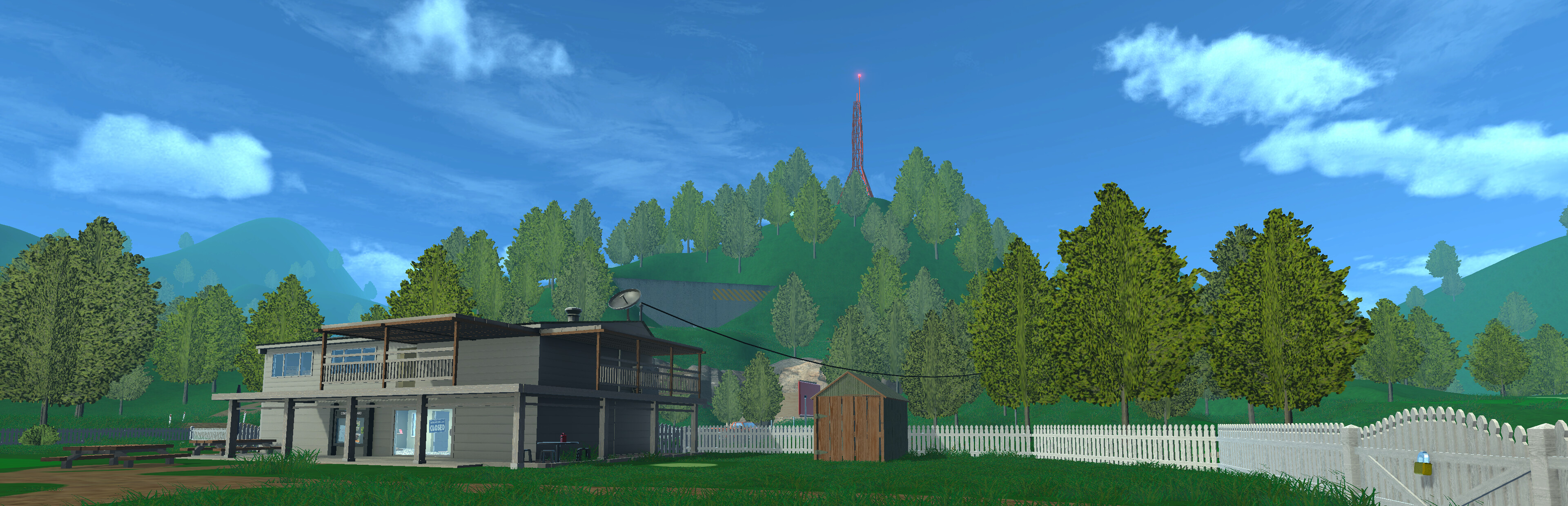
The aesthetic is intentionally "lo-fi" yet high-effort. Your character’s hands and the clubs are actual video captures of Muscat, green-screened into the 3D environment. This creates a surreal "FMV" (Full Motion Video) quality that makes every swing feel personal. According to community reports, this visual style isn't just a gimmick; it adds to the claustrophobic feeling of being watched by the "security cameras" scattered around the course.
Core Premise
You are trapped in a golf simulation by developer Luke Muscat. You must complete physics-based challenges to pay off a massive debt and escape, all while navigating a world that feels both like a playground and a trap.
Mastering the Mechanics: The Physics of Frustration
The heart of the normal golf game review lies in the controls. Unlike traditional golf games where a button press determines power and accuracy, this game requires manual mouse or analogue stick manipulation of the club's path. You aren't just clicking; you are swinging.
The Anatomy of a Swing
To hit the ball, you must drag your hands in a circular motion. If you follow the outer edge of the control space too strictly, you will hit the turf—a "fat" shot that sends dirt flying but leaves the ball stationary. If you swing too high, you "thin" or "top" the ball, sending it skittering along the ground.
Control Action
Resulting Mechanic
Impact on Gameplay
Mouse/Stick Drag
Manual Swing Path
Determines contact point (Fat, Thin, or Flush)
Q & E Keys
Club Face Curve
Adds spin to create draws or fades
A & D Keys
Horizontal Aim
Adjusts the starting direction of the shot
Z & C Keys
Fine Aim Tweak
Essential for long-distance precision
Space Bar
Quick Reset
Allows for rapid-fire practice after a bad shot
Player Experience Note: As noted in several community reports, the most difficult aspect is the "pat your head and rub your tummy" nature of the controls. You must manage the swing path with one hand while potentially adjusting the club face angle mid-swing to account for the 30 mph winds that Muscat occasionally "forgets" to turn off.
The Club Progression: From Irons to Drivers
You don't start as a pro. In fact, you start without the most basic tools. The game forces you to earn your way through the bag, creating a sense of progression that is rare in the sports genre.
The Putter
The putter is often the first major purchase. While it looks unassuming, it introduces the slope mechanics. By pressing the crouch button, you can see the undulations of the green. Power control here is critical; the "orange zone" on the power meter is your best friend, but even a perfect hit can be ruined by a poorly read slope.
The Driver
The "Big Stick" is the locking mechanism for the game's later stages. It provides immense power but is notoriously difficult to control. A slight error in the swing path with a driver doesn't just result in a rough lie; it can send the ball out of bounds or into one of the many surreal hazards, like giant bowling pins or air conditioning units.
Stance and Positioning
A unique feature highlighted by players is the ability to shift your stance. By moving your character forward or backward relative to the ball, you change the loft:
Forward Stance: Hits a flatter, lower-trajectory shot (great for wind).
Backward Stance: Scoops the ball higher (necessary for clearing obstacles like the Pro Shop).
Tutorial Challenges: A Step-by-Step Breakdown
The initial tutorial isn't just for learning; it’s a series of mandatory hurdles. Many players find themselves stuck on the "No Parking" sign challenge. Here is how to navigate the early game based on community reports.
Challenge
Objective
Pro Tip
The First Tee
Hit within 25 yards of the pin
Use a 3/4 swing; full power usually overshoots the green.
Sign Smasher
Destroy boards on the No Parking signs
Aim for the top of the ball to "thin" the shot into the sign.
The Hidden Gong
Hit the gong behind the Pro Shop
Step back in your stance to get maximum height.
Bowling Pin Curve
Hit the pin behind a barrier
Use Q to set a heavy draw spin and aim right of the target.
Thin to Win
When trying to hit vertical targets like signs or gongs at close range, deliberately "thinning" the ball (hitting the top half) often provides a more predictable line than a full, loopy swing.
The Economy of Bounties
Once you enter the Pro Shop, the game opens up into a bounty system. These are the primary way to earn the cash needed to buy new clubs and eventually "escape." Bounties are categorized by difficulty:
Easy Bounties: Consistency tasks, like hitting the fairway three times in a row.
Difficult Bounties: Precision tasks, like landing within 8 yards of a flag in heavy crosswinds.
Impossible Bounties: Surreal tasks, such as hitting a ball into a giant toilet or clearing a tiny island.
The $1,000 reward for finding "lost balls" or completing multi-hit challenges is essential for unlocking the Driver. Players should prioritize the "Fairway Consistency" bounty early on, as it builds the muscle memory required for the later, more chaotic stages.
Why This Game is a "Contender"
In a world of hyper-realistic simulators, this normal golf game review must acknowledge that Muscat has created something truly unique. The game has a "Bennett Foddy-like" quality (referencing Getting Over It). It is a game designed to be mastered, not just played. The elation of finally hitting a straight drive after 30 minutes of slicing into the woods is a feeling few other modern games provide.
As stated on the official Normal Golf Game Steam page, the game is a "sadistically accurate recreation" of the sport's difficulty, if not its reality. The physics engine doesn't cheat for you. If you hit the hosel, the ball will shank. If you don't account for the wind, you will end up in the bunker.
Reset Caution
In multi-hit bounties, pressing the reset button will often teleport you back to the tee, wiping your progress for that specific challenge. Only reset if the ball is truly unplayable.
Comparison: Normal Golf vs. The Competition
To understand where this game sits in the market, let's look at how it compares to other "alternative" golf titles.
Feature
Normal Golf Game
WHAT THE GOLF?
PGA Tour Series
Physics Style
Realistic/Maddening
Arcade/Slapstick
Sim/Predictable
Narrative
Surreal/Meta
Humorous/Random
Career/Traditional
Control Depth
High (Analogue)
Low (One-touch)
Medium (Click-timing)
Visual Style
FMV/Green Screen
Stylized 3D
Photorealistic
Primary Emotion
Frustration/Triumph
Surprise/Laughter
Focus/Relaxation
Final Thoughts for the Aspiring Golfer
This normal golf game review concludes that while the game is frustrating, it is immensely rewarding. It captures the "soul" of golf—the feeling that you are one tiny adjustment away from perfection, only to fail miserably on the next swing. Luke Muscat has turned his "world's worst golf swing" into a mechanical masterpiece that rewards persistence over reflexes.
If you can handle the meta-commentary, the negative bank balance, and the physics that refuse to give you a break, you will find one of the most memorable indie titles of 2026. Just remember: Luke Muscat is watching, and he isn't letting you leave until he's satisfied.
</hr>
Frequently Asked Questions
Is there a way to make the normal golf game review easier?
Yes — the full release includes Easy, Normal and Hard difficulty modes, and Easy Mode automatically sets the club angle and spin for you. You can also use "Practice Mode" (toggled with the X key) to take swings without moving the ball, and adjusting your stance to the left or right helps compensate for a natural tendency to slice or hook the ball.
How do I escape the $100,000 debt in Normal Golf Game?
To pay off your debt and progress, you must complete Bounties found in the Pro Shop and scattered around the course. Start with the "Consistency" bounties, which reward you for hitting fairways, and use that money to buy the Putter and Driver. Completing the main tutorial challenges will also return your initial $100,000, though the "fictional" Luke Muscat may have other surprises in store.
Does the wind actually affect the ball in this game?
Yes, the wind is a major factor, often reaching speeds of 30 mph or more. Unlike other games where wind is a slight nudge, here it can completely negate a powerful drive. Based on player experience, you must learn to "shape" your shots using the Q and E keys to create draws and fades that fight against the wind direction.
Can I play Normal Golf Game on the Steam Deck?
Yes, the game is Steam Deck Verified. According to the developer, it runs well on most entry-level hardware. If you experience performance issues, the community recommends lowering the grass density in the settings, which can significantly improve the frame rate during complex physics calculations.