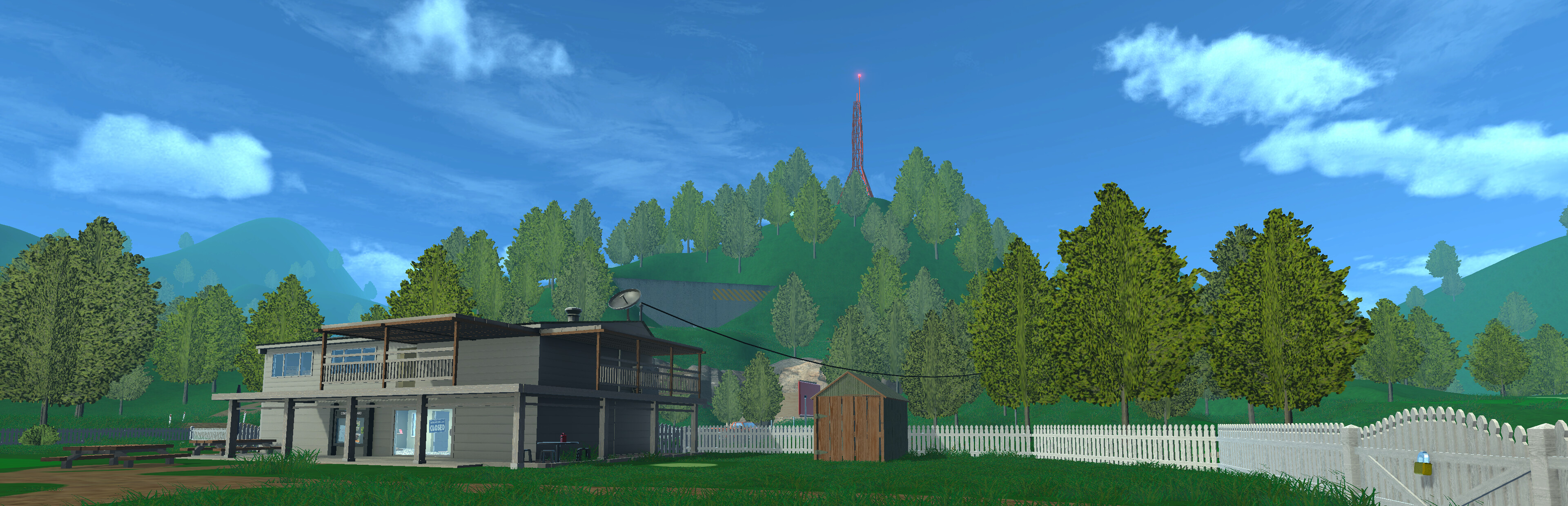
Mastering Normal Golf Game Art: Tips for Better Shots
Discover the secrets of Normal Golf Game art and mechanics. Get expert tips, learn how to hit like a pro, and dominate the course in this surreal simulator.
Published:
Table of Contents
Golf is often described as a relaxing sport, but in the world of Normal Golf Game, "relaxing" is a relative term that quickly turns into a test of patience and physics-based mastery. Developed by the legendary Luke Muscat, this title transforms a simple green into a surreal, challenging playground where every swing matters.
Understanding the unique normal golf game art and its underlying mechanics is the first step toward conquering this unconventional simulator. Whether you are struggling to clear the first hole or trying to find every hidden secret, this guide will walk you through the essential techniques to improve your performance and sanity.
The Philosophy of the Swing: Why Mechanics Matter
In most golf titles, you click a bar to time your shot. Here, the experience is entirely different. You aren't just selecting a power level; you are manipulating your hands, the club angle, and the physical interaction with the ball.
The normal golf game art style might look whimsical or slightly disjointed, but the physics engine is surprisingly robust. If you want to hit the ball straight, you cannot simply rely on luck. You must control your stance, the rotation of the club face using the A and D keys, and the momentum of your swing.
Essential Controls for Success
Mastering the interface is vital to stop the ball from flying into the "drink." Below is a breakdown of the key inputs required to navigate the course effectively.
Action
Key Input
Purpose
Rotate Club Face
A / D
Adjusts slice or hook trajectory
Reset Ball
Space
Quick restart after a bad shot
Toggle Walk/Golf
Tab
Switches between moving and swinging
Fine-tune Aim
Z / C
Micro-adjustments for precision
Toggle Spin
Q / E
Adds curve to the ball's path
Understanding the Physics: Fat, Thin, and Everything In Between
One of the most frequent frustrations for new players is landing "fat" or "thin" shots. Based on community reports, these are not just graphical glitches but feedback mechanisms telling you exactly how you are striking the ball.
Correcting Your Contact
If you constantly hit "thin," your club face is likely making contact with the top half of the ball. To correct this, focus on adjusting your stance to get slightly lower or shifting your point of impact to the middle of the club face.
The Impact of Stance on Trajectory
To get the ball higher, you need to adjust your stance. A wider stance or changing your position relative to the ball allows you to get underneath it. If you keep hitting the ground, try backing up slightly. The normal golf game art and physics often trick you into standing too close to the ball, which inevitably leads to those frustrating "fat" shots.
Beyond the Green: Navigating the Bounties
The game is not just about putting; it is an immersive experience where you are effectively kidnapped by a deranged game designer. You will find over a hundred bounties that require you to smash signs, find hidden gongs, or perform trick shots.
Many players get stuck on the "sign-smashing" challenges. Remember that you can use the Tab key to switch between walking and golfing to reposition yourself. Do not be afraid to experiment with your stance; sometimes, hitting a sign requires a high-arcing shot that demands a different club angle than a standard fairway drive.
Recommended Approach for Bounties
Analyze the Goal: Don't just swing. Look at the flag or target; is it blocked by obstacles?
Adjust for Wind/Spin: Use Q and E to add spin if the path is curved.
Consistency: If you hit a shot that works, memorize your stance and angle.
The "No Parking" Rule: If you are struggling with a sign, you likely need a specific trajectory (high arc) to clear the boards.
Advanced Techniques: Mastering the Draw and Fade
If you want to play like a veteran, you must learn how to manipulate the ball's flight path. A "Draw" curves left, while a "Fade" curves right. These are crucial for navigating around trees, walls, or the occasional giant bowling pin that may appear on your path.
Comparison of Shot Types
Shot Type
Mechanism
Best Used For
Straight
Neutral club angle, centered swing
Open fairways
Draw
Q/E spin, adjust A/D
Dogleg left holes
Fade
Q/E spin opposite, adjust A/D
Dogleg right holes
High Arc
Lowered stance, back-foot position
Clearing bunkers/walls
According to community feedback on the Steam Community Hub, the key to these shots is not over-committing. Use your Q and E keys in short, measured bursts rather than holding them down, which often leads to an uncontrollable slice.
Staying Sane: Tips for the "Normal" Experience
The game is designed to be maddeningly difficult at times. If you feel your frustration rising, remember that you are meant to laugh at the absurdity of it. The developer, Luke Muscat, intentionally created a "meta" storyline where you are forced to complete these ridiculous tasks.
Avoid Over-Powering
One of the most common mistakes is trying to hit the ball with maximum power every time. In most cases, power is secondary to accuracy. "Lots of power" usually leads to errors unless your contact is perfect.
Frequently Asked Questions (FAQ)
What is the goal of the Normal Golf Game?
The goal is to finish your tasks and survive the challenges set by the fictional game designer. While you can play a standard nine-hole round in the bonus mode, the main experience involves completing bizarre bounties.
Is the Normal Golf Game physics-based?
Yes, it is a highly accurate (and often sadistic) physics simulator. You must manage your stance, club angle, and swing momentum to achieve a perfect shot.
Why do I keep getting "fat" or "thin" notifications?
These are feedback indicators. "Fat" means you are hitting underneath the ball (digging into the dirt), and "thin" means you are hitting the top of the ball. Use your stance to change your height relative to the ball to correct this.
Can I play this on a Steam Deck?
Yes, the game is verified for Steam Deck and runs great on most entry-level hardware. If you experience performance issues, lowering the grass density in the settings can significantly improve your framerate.